Then I let out a slow, admiring whistle. “That’s… actually brilliant.”
“It’s risky. But Emily’s done playing nice. This is her day. We’re just the army.”
—
That night, Linda burst into our closet like a woman on a mission.
“I get to wear my wedding dress again!” she said, already tearing open storage bins. “Emily’s a genius.”
Word spread like wildfire. Group chats exploded with pictures of gowns rescued from attics. Some women borrowed, others thrifted. Lace, silk, satin—anything bridal went.
It was like a white rebellion was forming.
—
On the morning of the wedding, Linda stepped out of the hotel bathroom like an empress from another era. The dress hugged her just right. She looked radiant.
“I hope she brings the drama,” she said, tucking a snack bar into her clutch. “I brought popcorn.”
The chapel shimmered with anticipation. Women in white swirled through the aisles, all variations of bridal chic. A cousin in gloves, a friend in vintage lace, someone’s great-aunt in a beaded gown that belonged in a museum.
“This is either genius or a disaster waiting to happen,” I whispered.
“Either way,” Linda grinned, “I live for it.”
Then came the moment we were all waiting for.
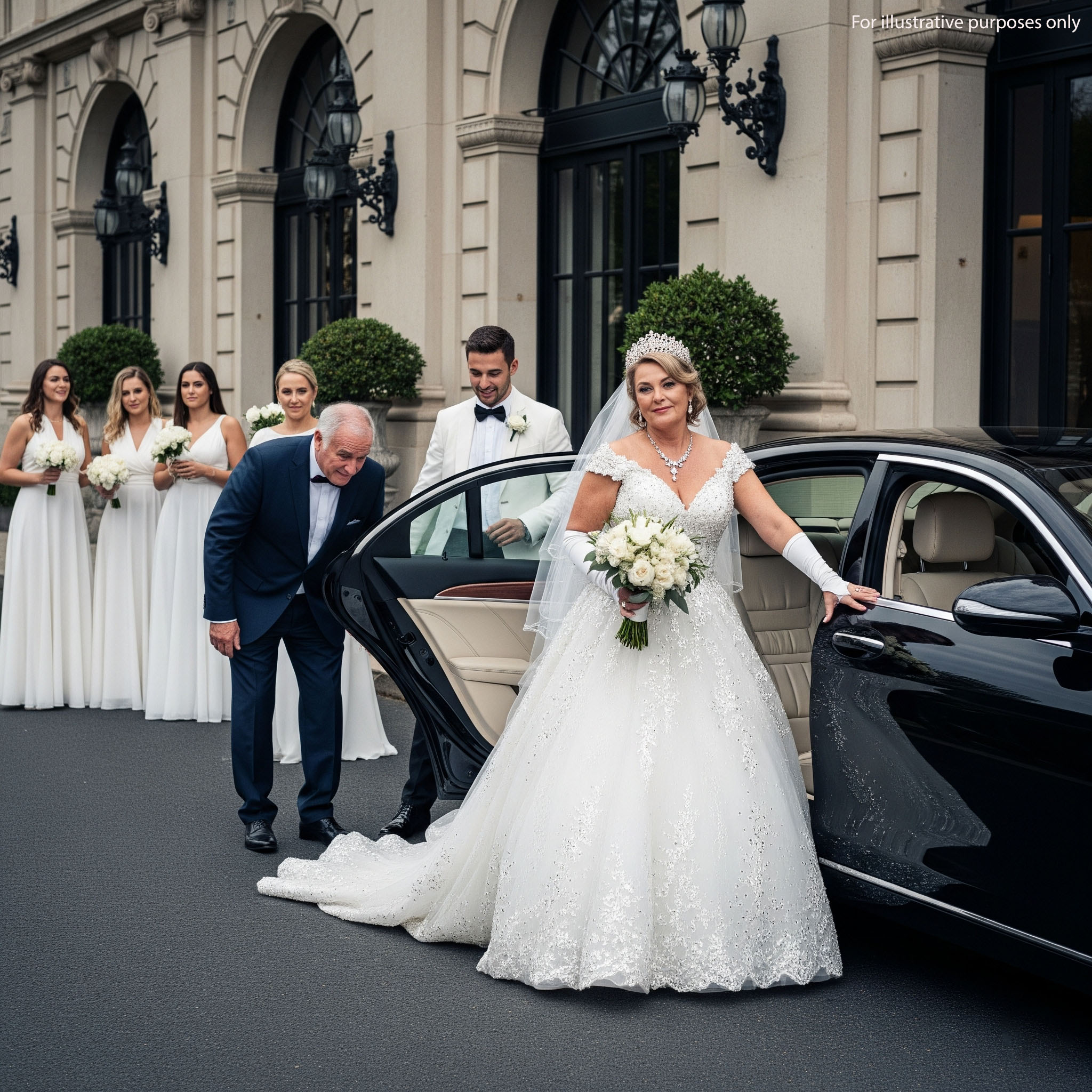
At exactly 2:47 p.m., a sleek silver car slid to a stop. And there she was.
Dorothy.
She stepped out like a movie villain making a red carpet debut—white rhinestone gown, glittering tiara, a train long enough to trip an army.
Her husband Alan, trailing behind her, looked like a man resigned to fate.
David met them at the chapel door, smiling like he was swallowing a lemon.
“Welcome,” he said smoothly. “You’re just in time.”
Dorothy entered with regal confidence.
And froze.
Twenty women turned in unison to greet her. All in white. Every. Single. One.
The silence that followed was heavy and surreal. The organ music played on, but no one breathed.
Dorothy’s expression faltered, lips twitching, unsure whether to rage or retreat.
“What is the meaning of this?” she hissed. “Who wears white to a wedding that isn’t theirs?!”
A woman nearby adjusted her veil casually. Another twirled.
Then Alan, in a moment of bravery or madness, cleared his throat. “Well, uh… you’re wearing white, too, sweetheart.”
Dorothy turned to him, eyes like daggers. “I’m her mother. It’s different.”
But her voice was cracking. The moment was slipping.
She looked again at the room—a sea of defiant elegance. And she understood. This wasn’t random. It was war.
And she had lost.
The doors opened again. Everyone turned.
Emily stood framed in the entrance, and gasps echoed through the chapel.
She wore a dress the color of fire—deep crimson, threaded with gold. No veil. No white. Just a radiant flame walking on her own terms, arm in arm with her father.
She didn’t need a spotlight. She was the spotlight.
Dorothy didn’t make a scene. She simply… deflated. Quietly retreating to her pew like a queen without a throne.
The ceremony was beautiful. No drama. Just love.
Dorothy never applauded. She left before the first dance, her train dragging like a surrendered flag.
Alan offered a sheepish smile and followed.
The rest of us celebrated harder in their absence—dancing, laughing, toasting to love and rebellion and red dresses that scorched tradition.
Later, I found Emily at the bar. Her eyes sparkled like the gold in her gown.
“That was poetic,” I told her. “You rewrote the script.”
She raised her glass. “Sometimes, the only way to win… is to change the game entirely.”
Linda joined us, grinning. “To the bride,” she said. “Who burned brighter than anyone else in the room.”
We clinked glasses.
And I realized—some weddings have flowers. Some have fireworks.
But only a few have a phoenix