When the man in the blue suit stepped out of the black car, he noticed the toy first, then the boys, then the look in their eyes. Not mischief. Not shame. Need. He walked over and knelt beside the small red car. “You’re selling this?” he asked gently. “Yes, sir,” Ethan said, trying not to let his voice shake. “It’s my car.” The man glanced at the younger brother, Noah Brooks, who stood quietly with his fists clenched, fighting tears. “Why would you sell your favorite toy?” Ethan looked down at the dry leaves gathered around the wheels. “Because our mommy needs medicine.” The man’s expression changed instantly. Something about the way the boy said mommy—soft, scared, and loyal—hit him harder than it should have. He studied their faces more closely now. The shape of their eyes. The line of Ethan’s jaw. A strange familiarity he couldn’t place. Then he noticed something tied around the steering wheel. A faded blue ribbon. His breath caught. He knew that ribbon. Years ago, he had tied one exactly like it around a hospital gift box for the woman he once loved—Emily Carter—the woman who disappeared from his life the same week she told him she had something important to confess. His voice dropped to a whisper. “Who is your mother?” Ethan hesitated, then reached into his coat pocket and pulled out a folded prescription paper. The name at the top made the man go pale. Emily Carter. And under “emergency contact,” the boys had written only two words: Unknown father. The man—Jonathan Hayes—felt the world tilt beneath him. For years, he had told himself Emily left because she didn’t love him enough, because she chose a different life. But now, standing in front of these boys, seeing his own past reflected in their eyes, he realized the truth might be something else entirely. “Where is she?” Jonathan asked, his voice no longer steady. Ethan looked uncertain. “She’s at home… she’s really sick.” Jonathan didn’t hesitate. “Take me to her.” The boys exchanged a glance, then nodded. They trusted him—not because of his suit or his car, but because of the way he looked at them. Like they mattered. Like he already knew them. They walked together through narrow streets, past broken sidewalks and dim streetlights, until they reached a small, worn-down apartment building. Inside, the air smelled of damp walls and old medicine. Ethan opened the door quietly. Emily lay on a thin bed, her face pale, her breathing shallow. For a moment, Jonathan couldn’t move. The woman he once loved, the woman he had searched for in every crowd for years, was right there—and barely holding on to life. “Emily…” he whispered. Her eyes opened slowly. When she saw him, confusion flickered across her face, then disbelief, then something deeper. “Jonathan?” she breathed. “I thought… I thought you forgot me.” He stepped closer, his chest tightening. “I never forgot you. You disappeared. You never told me why.” Tears slipped down her temples. “I was pregnant,” she said weakly. “Your family… they came to me. They said if I told you, they would destroy your future, your company, everything you had worked for. They paid me to leave. They told me you would hate me if you knew I stayed for money… so I left without saying anything.” Jonathan felt something inside him shatter. All those years of anger, confusion, and regret collapsed into one unbearable truth. “And the boys…” he asked softly. Emily looked toward Ethan and Noah, who stood silently in the doorway. “They’re yours,” she whispered. Silence filled the room, heavy and fragile. Jonathan turned toward the boys again, really seeing them this time. His sons. The word felt both new and undeniable. He stepped forward and knelt in front of them. “You don’t have an unknown father,” he said quietly. “You have me.” Noah’s eyes filled with tears. Ethan tried to stay strong, but his lips trembled. “You’re… our dad?” Jonathan nodded, his voice breaking. “I’m so sorry it took me this long to find you.” That night, everything changed. Jonathan called his private doctor, arranged immediate treatment, and had Emily transferred to the best hospital in the city. He didn’t leave her side. He didn’t leave theirs. The red pedal car stayed in the trunk of his car—not as something to sell, but as something to remember. Days turned into weeks. Emily slowly regained strength. The boys adjusted to a life that felt almost unreal—warm meals, safe beds, laughter that didn’t feel forced. But Jonathan never tried to replace the years they lost. He simply showed up, every day, proving that he wasn’t leaving again. One evening, as the sun dipped low outside the hospital window, Ethan walked up to him. “Are you really staying?” he asked quietly. Jonathan looked at him, then at Noah playing nearby, then at Emily resting peacefully. “I’m not going anywhere,” he said. Ethan nodded, as if testing the truth of those words. Then, for the first time, he let himself smile. Months later, the red pedal car sat in a garden behind their new home. The blue ribbon was still tied to the wheel, faded but unbroken. A reminder. Because sometimes, the things we think we’ve lost forever… are only waiting for the moment we’re brave enough to find them again.
He Was Thrown Out With Nothing… Then Found a Secret Worth Millions
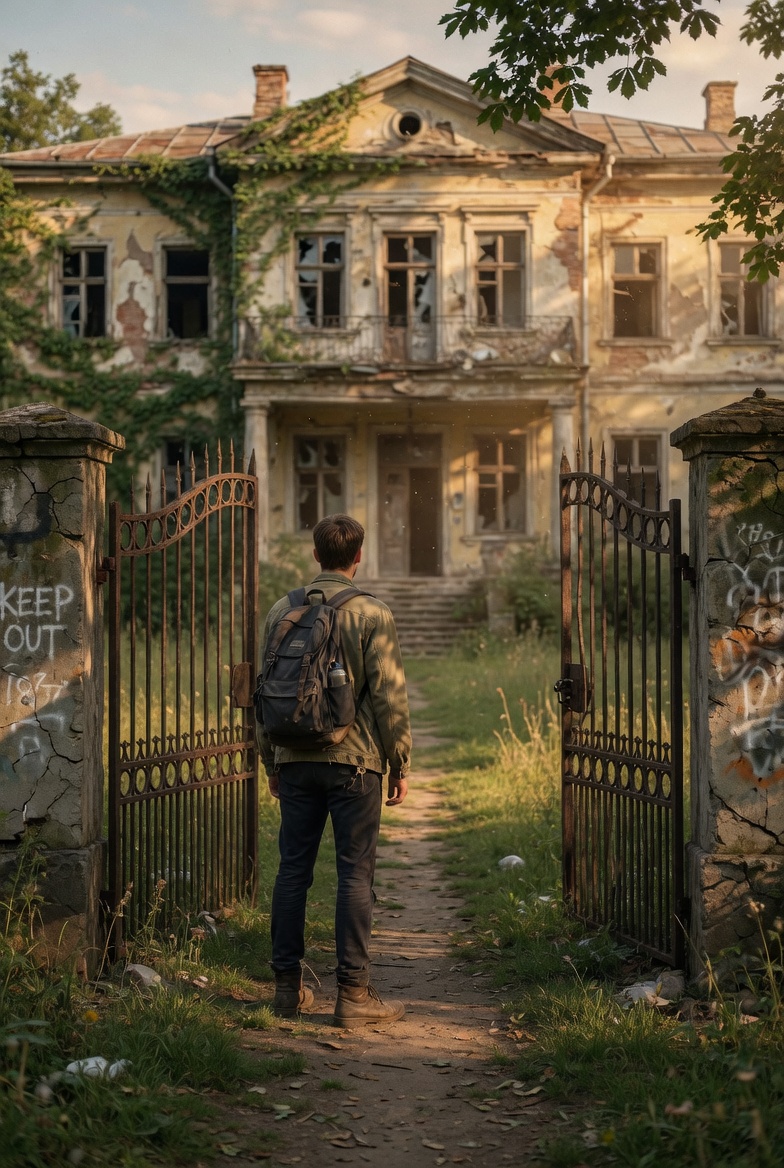 The rain fell mercilessly over the cobblestone streets of a small suburb near Puebla, Mexico. Ethan Carter, only 18 years old, walked aimlessly, feeling the weight of the world crushing his fragile shoulders. Just three months earlier, his beloved mother, Clara Carter, had lost her battle against a cruel and unforgiving illness. Her final breath had taken with it the only light that had ever guided his life.
Richard Cole, his stepfather who had always looked at him with silent disdain, wasted no time after the funeral. That same cold night, with the sickening smell of cheap tequila on his breath, he threw Ethan’s old backpack into the thick mud of the yard.
“You don’t have my blood in your veins. You’re nothing but a useless burden! Your mother isn’t here anymore to protect you. Get out of my house and out of my life forever!” he shouted, slamming the heavy wooden door so violently it seemed to shake the boy’s soul.
Memories of the last Día de los Muertos, when Clara was still smiling and preparing sacred bread of the dead, haunted Ethan’s tortured mind.
With only 240 pesos in his pocket, Ethan found himself thrown cruelly into the street. The first nights were a living nightmare of cold and constant hunger. He slept on frozen benches in the town square, covering himself with damp newspapers. The streets carried the distant smell of fresh tortillas and roasted corn—a cruel contrast to his empty stomach.
When despair threatened to swallow him completely, he found refuge in Mr. Antonio’s hardware store, a large-hearted man with a gray mustache.
“I don’t have experience, sir, but I promise I’ll work harder than anyone. I’ll carry cement bags, sweep, clean… I just need a chance to survive,” Ethan pleaded, holding back tears.
Deeply moved by the determination in the boy’s eyes, Antonio offered him a modest job cleaning the warehouse for 500 pesos a month.
It was on a dusty afternoon that Ethan’s destiny changed forever. A well-dressed man, visibly exhausted and on the verge of collapse, entered the hardware store. His name was Victor Hayes, and he was desperately trying to sell his old property—the abandoned Montero Estate, a massive ruined hacienda on the outskirts of town.
“The house has been abandoned for 15 years. It’s draining my money, the taxes are killing me, and no one wants it because they say it’s cursed by my uncle Alejandro, who died there completely alone,” Victor said.
In a moment of desperation, he shouted:
“I’d sell it for 100 pesos to anyone brave enough to take it!”
Ethan’s heart raced. He needed a roof. Against all warnings, he gave his last 100 pesos and signed the papers.
That same night, he walked to the estate. It stood like a broken skeleton of stone, covered in vines and moss. The windows looked like empty eyes watching the darkness.
Inside, the air smelled of abandonment and decades of dust.
Near midnight, strange sounds began. A slow, metallic dragging echoed through the walls like a funeral lament. Trembling, Ethan grabbed his flashlight and followed the sound. It led him to a hidden door behind a fallen shelf.
With a desperate push, the wood gave way. A freezing gust of air mixed with the smell of chemicals and paint hit his face.
He descended the stone steps slowly.
And what he saw below made his breath stop.
A hidden art studio.
Fifty paintings.
Masterpieces.
The works of Alexander Montero, the man everyone believed had gone insane and vanished decades ago.
The next morning, Mrs. Carmen, an elderly neighbor with a kind smile, arrived with food. With her support and Antonio’s help, Ethan began restoring the estate.
But the secret in the basement burned inside him.
Through an old newspaper, he found Professor Laura Bennett, an expert in Latin American art. He spent his last money traveling to find her.
Two days later, she arrived.
When she saw the paintings, she dropped to her knees in shock.
“My God… Ethan… these are priceless. Montero was a master. These paintings are worth millions.”
The news spread like wildfire.
And with it—danger.
Richard, his stepfather, heard the rumors. Greed consumed him. One stormy night, he broke into the estate with armed men.
“Open the door! That treasure belongs to me!” he screamed.
Ethan trembled—but not with fear.
He called the police.
When Richard broke in, ready to attack, sirens shattered the night.
He was arrested.
Justice had finally arrived.
Soon after, the paintings were auctioned in Mexico City. The event attracted wealthy collectors from around the world.
The final result:
25 million pesos.
Ethan, who had been homeless just weeks before, was now a millionaire.
But he didn’t change.
He restored the estate completely.
He turned it into a museum and community center.
He helped the poor.
He honored those who helped him.
He studied architecture and built a future.
Years later, during Día de los Muertos, he stood before an altar dedicated to his mother and Alexander Montero. He lit a candle and smiled in peace.
Because the house that once seemed cursed…
had given him everything.
And the lesson remained:
The most abandoned things…
often hold the greatest beginnings.